A Groundbreaking New Biotech Hub Is Taking Shape in Berlin
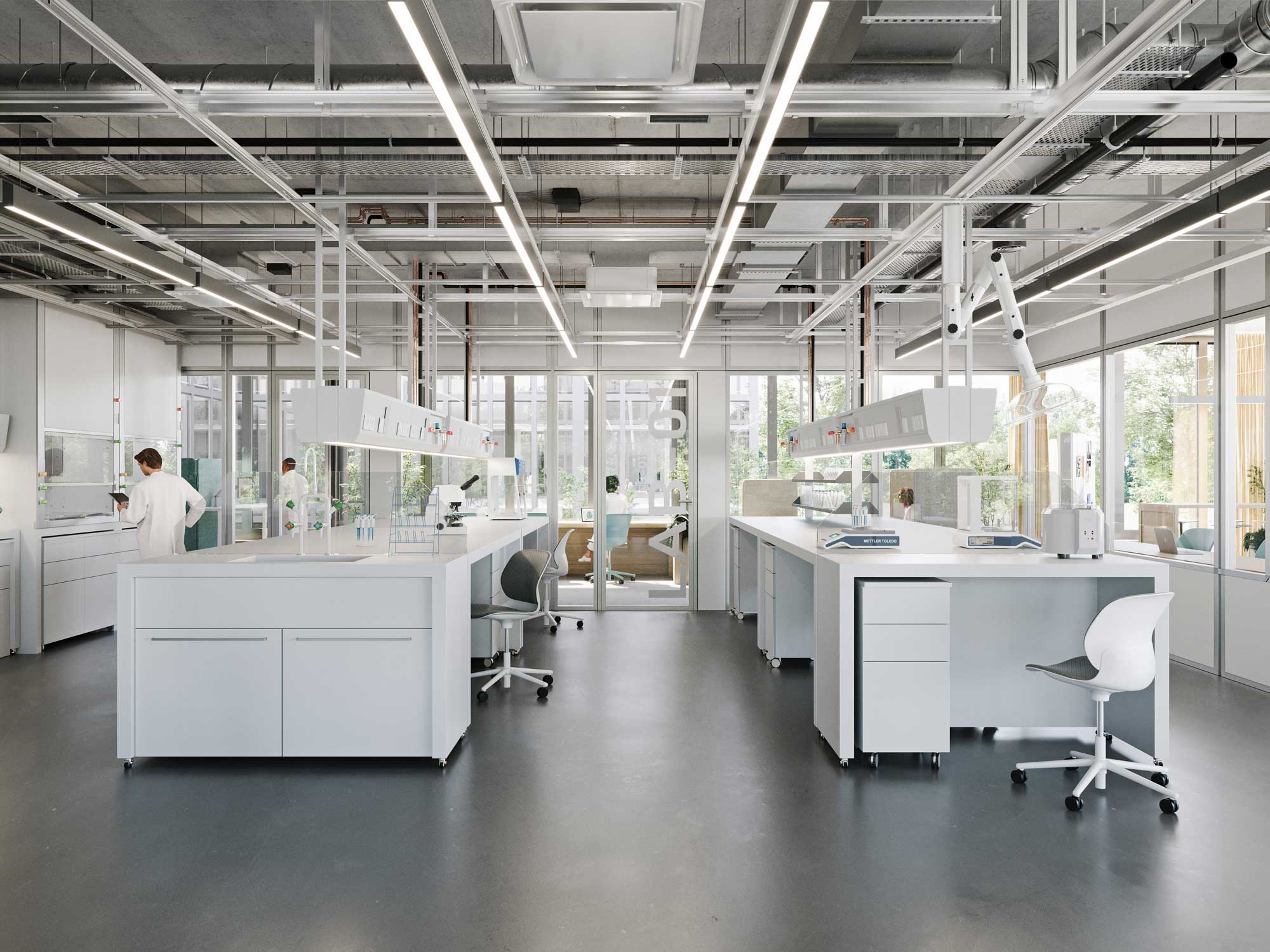
Berlin’s Nordhafen district is transforming into a hotspot for life sciences innovation with the upcoming iQ space—a 25,000 m² facility designed as a hub for gene and cell therapy research and production.
Set to open in 2028, this building will house up to 900 researchers and developers, fostering collaboration between Bayer AG, Charité – Universitätsmedizin Berlin, and the Berlin Institute of Health (BIH). The project, initiated as a startup incubator, emphasizes Good Manufacturing Practice (GMP) standards, ensuring therapies can progress from concept to market under the highest quality controls.
The iQ space stands out for its transparent, modular design, which places science on display. Its open, glazed base blurs the line between the lab and the surrounding environment, including the adjacent riverside park and Bayer’s campus. Researchers will work in adaptable spaces, connected by shared areas that span two floors.
The building’s façade features folded elements for sun shading and integrates balconies overlooking the Nordhafen, offering researchers a lounge area with views of the water.
Sustainability is a core principle of the design. Solar panels cover the roof, while the façade’s angles optimize energy efficiency. This approach reflects a broader trend in Berlin’s tech and biotech sectors, where innovation is increasingly paired with environmental responsibility. The project is also a statement about Germany’s ambition to reclaim its position as a leader in cutting-edge medical research and production.
By merging lab, office, and communal spaces, the iQ space redefines what a research facility can be—open, sustainable, and deeply embedded in the city’s fabric. It’s a model for how Berlin is positioning itself at the intersection of healthcare, technology, and urban living.
